Simpleswap Transaction Preparation and Outcome Verification
Simpleswap routes a crypto exchange from a one-time deposit address to the recipient wallet and assigns an Exchange ID for tracking. Before transferring funds, match the asset, network, amount, recipient address, and any required memo or tag to the order. After sending, compare the order status with the deposit TXID and payout record. The service status describes processing progress, while blockchain records confirm what actually moved between addresses.
The short version: Save the Exchange ID, confirm every wallet detail before deposit, and use blockchain records to verify both the incoming deposit and payout.
The exchange record before funds move
An exchange begins with a trading pair, an amount, a rate type, and a recipient address. The selected asset and network determine which deposit address the order provides. Depending on the route, the form may also request a refund address, email address, memo, destination tag, payment ID, or another identifier.
Creating that record does not transfer crypto. The order moves forward only after the specified asset reaches its assigned deposit address on the selected network. This interval is the safest point for corrections. If any order detail is wrong and no deposit has been sent, leave the order unused and create a replacement with the correct information. Save only the Exchange ID belonging to the order you intend to fund.
Wallet, network, and memo alignment
The recipient address must support both the output asset and its selected network. An address copied from a wallet does not establish compatibility by itself. Confirm the asset and network inside the receiving wallet, then copy any memo, tag, Payment ID, or Extra ID shown with the address. Omitting a required identifier can delay crediting or make recovery difficult.
The deposit side requires the same discipline. Send only the asset and network named in the order, and use the newly assigned deposit address once. A transfer made through another network can remain valid on that blockchain while being unusable for the requested exchange. A refund address, when offered, should likewise support the original deposit asset and network.
Fixed and floating rate commitments
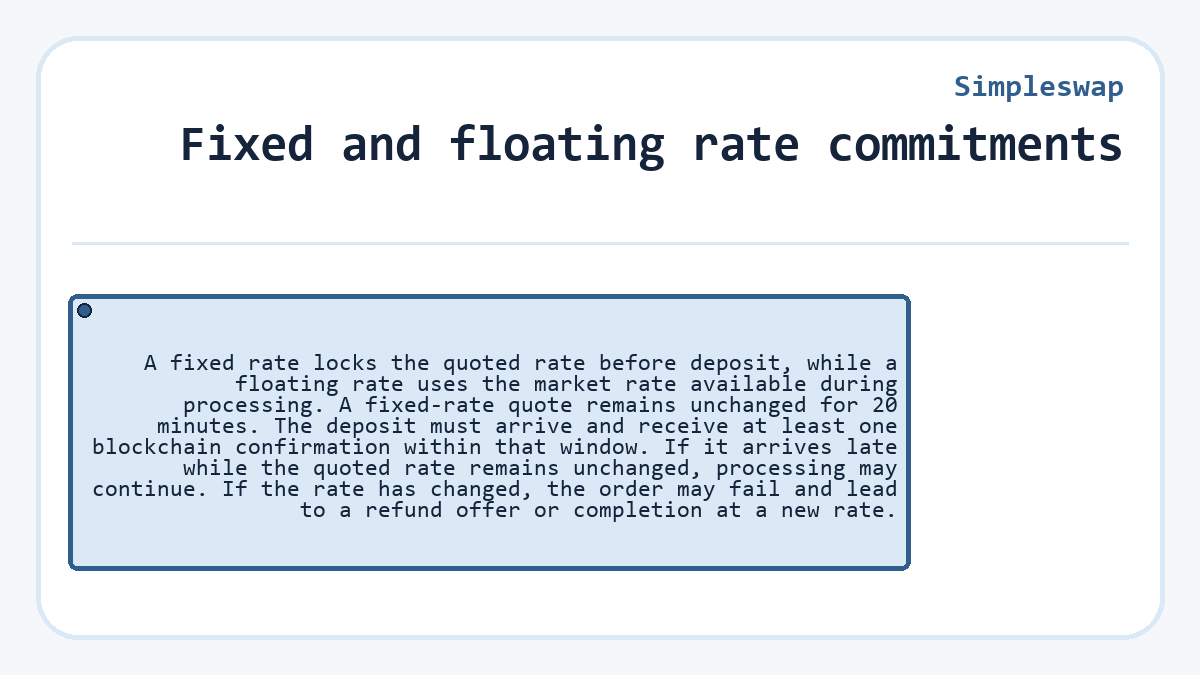
A fixed rate locks the quoted rate before deposit, while a floating rate uses the market rate available during processing. A fixed-rate quote remains unchanged for 20 minutes. The deposit must arrive and receive at least one blockchain confirmation within that window. If it arrives late while the quoted rate remains unchanged, processing may continue. If the rate has changed, the order may fail and lead to a refund offer or completion at a new rate.
A floating-rate order shows an estimate when the exchange is created. The final output is calculated during processing, so market movement, liquidity, and confirmation time can change the received amount. This option removes the fixed quote window, but it does not remove the displayed minimum, route availability, compliance checks, or network conditions. The estimate should therefore be read as provisional.
Crypto swaps and fiat purchase paths
Crypto-to-crypto orders use aggregated centralized and decentralized exchange liquidity to route value between wallets. The user sends the specified crypto to the order address, and the selected route delivers the output asset to the recipient address. Most such swaps do not require an account, but an individual transaction may still undergo additional monitoring.
Fiat purchases follow a different path. A third-party payment provider processes the card or other available payment method, and its regional availability, fees, limits, and identity checks apply. The options shown during checkout depend on location, currency, payment method, asset, and network. A crypto exchange order and a fiat provider checkout should not be treated as the same workflow.
Status changes from deposit to payout
The status page separates service processing from blockchain confirmation. Each label answers a narrower question about the order:
- Pending deposit means the assigned address has not received the required transfer.
- Confirming means the deposit is accumulating the required blockchain confirmations.
- Exchanging means a liquidity route is processing the conversion.
- Sending means the output asset is being dispatched to the recipient.
- Finished means the service has completed its exchange workflow.
- Failed, Verifying, Expired, and Refunded identify exception or recovery states.
A Finished status should agree with the receiving wallet and the payout transaction record. A wallet interface can lag behind the blockchain or hide a token until the correct network is selected. When the records disagree, keep the Exchange ID, deposit TXID, and payout transaction details together instead of starting another transfer.
Exchange ID and blockchain proof
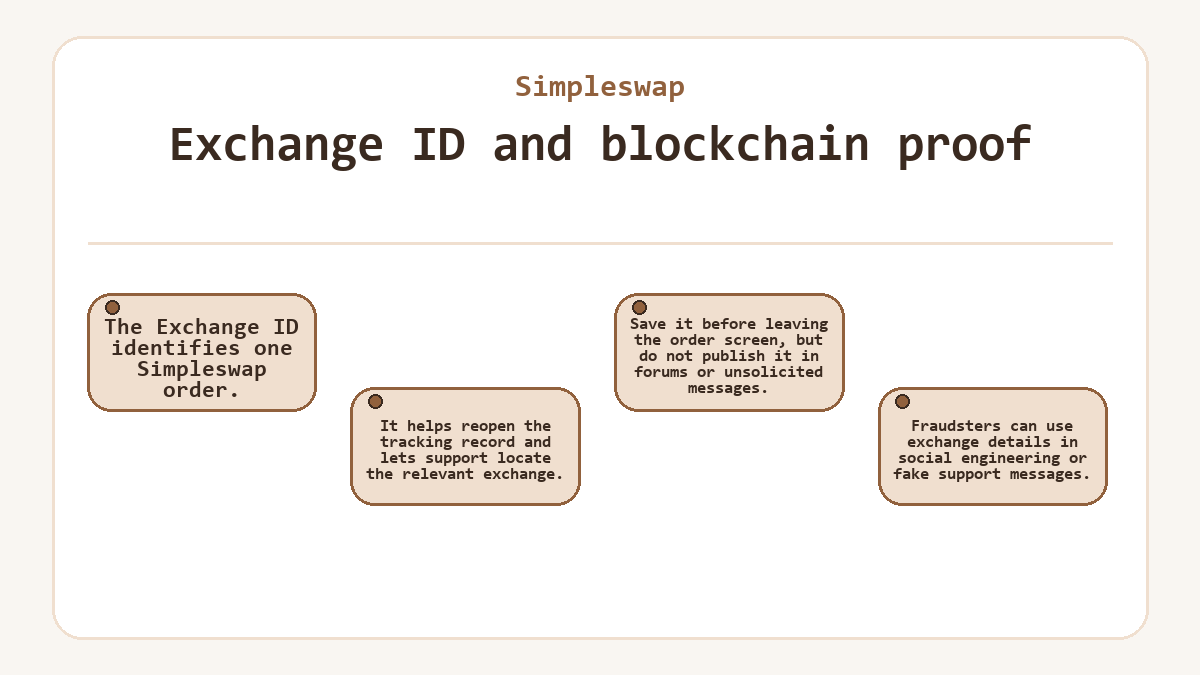
The Exchange ID identifies one Simpleswap order. It helps reopen the tracking record and lets support locate the relevant exchange. Save it before leaving the order screen, but do not publish it in forums or unsolicited messages. Fraudsters can use exchange details in social engineering or fake support messages.
A transaction hash, commonly called a TXID, identifies an on-chain transfer rather than the exchange order. The deposit TXID shows whether the input reached the expected blockchain address and how many confirmations it has. A payout TXID, when available, shows where the output was sent. These identifiers answer different questions, so one cannot replace the other during reconciliation.
A reversible correction before deposit
In this hypothetical correction, the recipient detail is wrong, and the recovery path changes depending on when the mistake is noticed. No specific asset, network, address, or amount is assumed. If the order still says Pending deposit, the smallest reversible action is to leave it unfunded and create a new order with the corrected recipient information.
The new order should have its own Exchange ID and deposit address. Compare the corrected recipient, network, and any required memo before sending. After funding the replacement order, confirm its deposit TXID records a transfer to the assigned address. The replacement is complete when its payout record agrees with the intended receiving wallet.
If the same error is noticed after the deposit enters Confirming, direct editing may no longer be available. Do not send a second deposit or reuse either order address. Preserve the original Exchange ID and TXID, then use the service support path for instructions. The case is resolved when a documented payout, order change, or eligible refund is tied to the original record. Do not attempt a manual correction without support instructions.
Costs, minimums, and received amounts
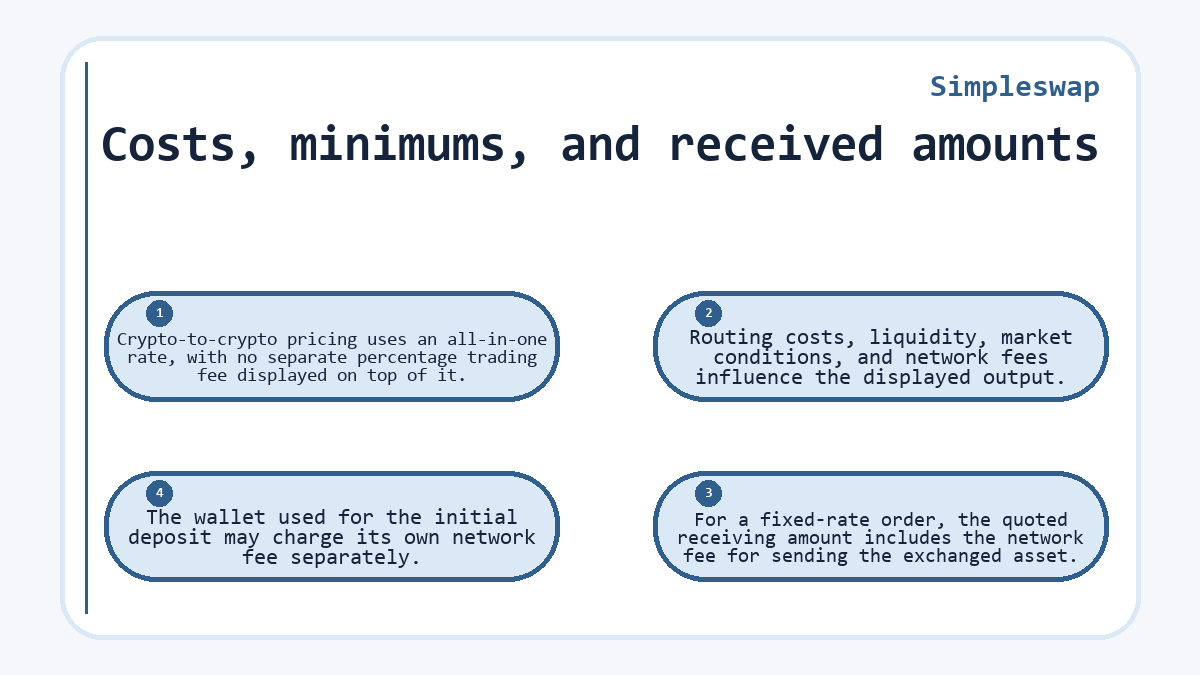
Crypto-to-crypto pricing uses an all-in-one rate, with no separate percentage trading fee displayed on top of it. Routing costs, liquidity, market conditions, and network fees influence the displayed output. For a fixed-rate order, the quoted receiving amount includes the network fee for sending the exchanged asset. The wallet used for the initial deposit may charge its own network fee separately.
Minimums depend on the selected pair, network costs, liquidity, and exchange conditions. Use the minimum displayed for the particular order rather than a remembered figure. Sending less can cause failure, and a refund may not be possible when the deposit cannot cover the necessary network cost. Floating-rate output can also differ from its estimate, so reconciliation should use the amount actually recorded in the payout.
Recovery paths for exception statuses
Failed, Verifying, and Expired statuses need different responses. A failed order has stopped and may require support to determine whether completion, a change, or a refund remains available. Verifying means additional monitoring is underway and can lead to requests for identity, address, source-of-funds, or deposit-ownership evidence. Expired means a required action was not completed within the applicable period.
A confirmed blockchain transaction cannot be cancelled. Once a deposit has been sent, recovery depends on the order state, the route, and whether the transferred asset can cover network costs. Keep the Exchange ID, deposit TXID, sending address, intended recipient information, and any requested ownership evidence. Share them only through the support channel reached from the service itself.
Deposit, payout, and refund reconciliation
Reconciliation compares the order record with both blockchain sides. The input asset, network, deposit address, TXID, and amount should agree with the funded order. On the output side, check the recipient address, network, payout amount, and payout transaction. A Finished label without a visible wallet balance calls for a blockchain check before any new action.
A refunded order needs the same treatment. Confirm the refund destination and transaction record rather than relying only on the label. Keep the order details until the payout or refund has the required network confirmations and appears under the intended wallet. In a fixed-rate order, the 20-minute quote window governs rate commitment, while the Exchange ID and blockchain records establish the final outcome.
Before you start with Simpleswap
-
Can a Simpleswap deposit address be reused for another transfer?
- No. A deposit address is assigned to a particular exchange order and should be used only for that transaction. Reusing it for a second payment can separate the transfer from the terms, recipient details, and rate attached to the new order. If another exchange is needed, create a new order and send funds only to the deposit address it provides.
-
When may identity checks apply to a crypto-to-crypto exchange?
- Identity or supporting-document checks may apply when transaction monitoring, anti-money-laundering requirements, a liquidity provider, a government request, or a financial institution requires them. Most crypto-to-crypto swaps do not require account creation, but that does not exempt every transaction from review. A Verifying status can lead to requests for identity, address, source-of-funds, or deposit-ownership evidence.
-
Which cards can fund a fiat purchase through Simpleswap?
- A debit or credit card can be used only when the selected payment provider supports it in the buyer's region. Card networks, issuing banks, currencies, limits, and verification steps differ among providers and countries. The available checkout offers show which methods apply to that purchase. A rejected card may require another displayed provider or payment method, subject to its own terms.
-
Does a floating-rate exchange have an upper amount limit?
- Floating-rate exchanges do not have a strict platform-wide upper limit, but that does not make every amount available. Liquidity, the selected pair, network conditions, and internal checks can restrict a particular order. Enter the intended amount and review the live route before sending funds. A displayed route and minimum do not guarantee the same availability for a later or larger transaction.
-
Where can an eligible refund be sent?
- An eligible refund may go to the original sending address or to a valid refund address supplied with the order. In some cases, the original address can be the only available destination. The address must support the deposited asset and network. Processing may also require proof of deposit ownership, and applicable network costs can reduce the amount returned.
-
Are third-party recipient wallets allowed for the payout?
- Yes, an order can name another person's or service's wallet as the recipient, but the sender remains responsible for entering compatible details. Confirm the asset, network, address, and any memo or tag with the recipient before deposit. If the receiving service rejects or fails to credit the payout, preserve the Exchange ID and transaction record and contact support before requesting any return transfer.